How Proper Classroom Sanitization Reduces Student Absences: An Evidence-Based Guide for Austin Schools
A single sick student can trigger a cascade that disrupts an entire school week. One child with norovirus in a second-grade classroom can lead to 8-12 additional cases within 72 hours. A flu outbreak in a daycare can sideline half the enrollment and force working parents to scramble for backup care.
The connection between classroom cleanliness and student health isn't anecdotal — it's well-documented. Studies consistently show that targeted sanitization of high-touch surfaces reduces illness transmission in school environments by 30-50%. The key word is targeted. Not just cleaning. Not just wiping things down. But systematically disinfecting the specific surfaces where pathogens actually survive and transfer.
This guide breaks down which surfaces matter most, which products are safe for school-age children, and how to build a daily sanitization routine that actually reduces absences.
The Cost of Illness in Schools
school days lost annually in Texas due to illness-related absences
per-student daily funding lost for every absence in Texas public schools
of classroom surfaces test positive for cold or flu viruses during peak season
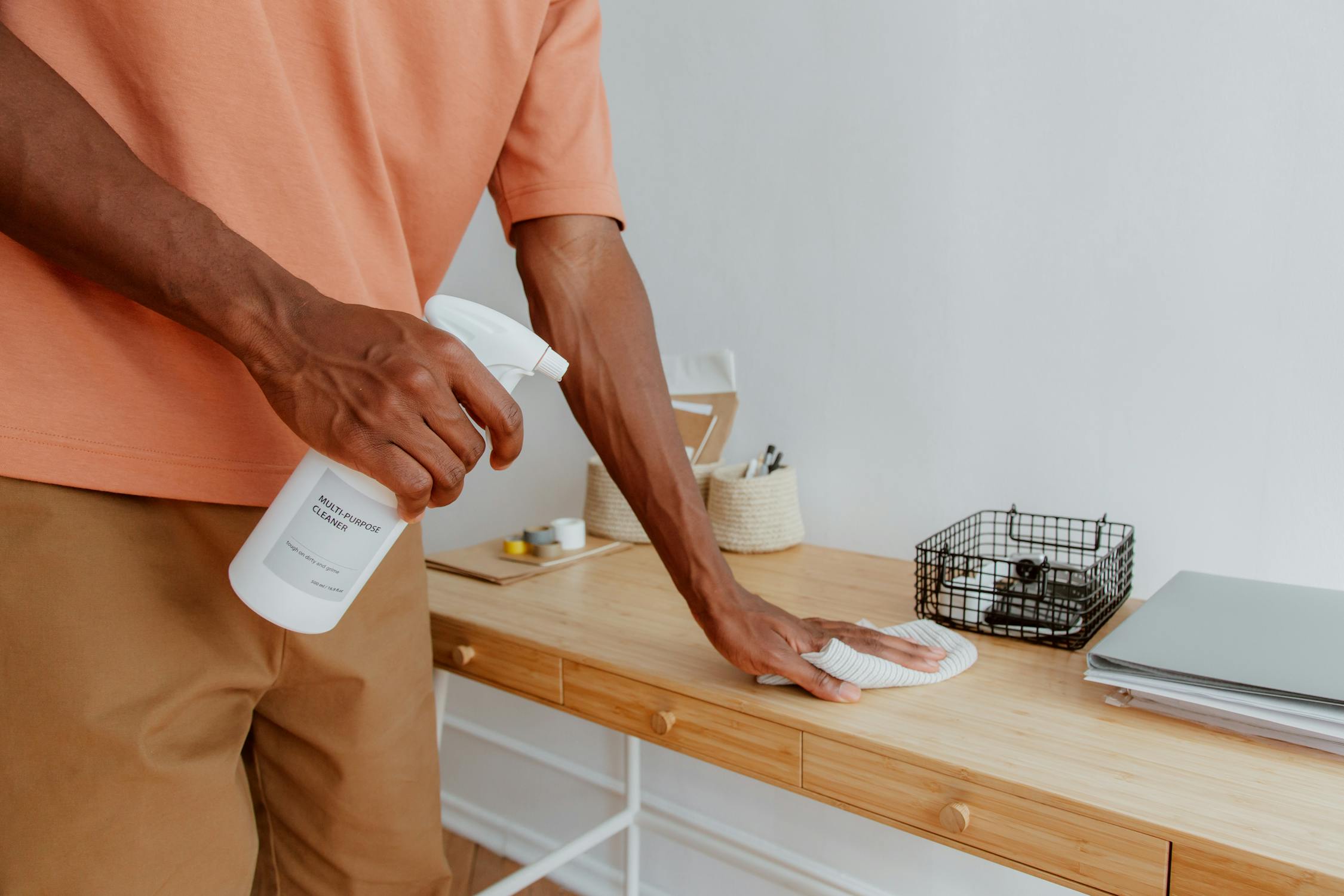
Targeted desk sanitization is one of the most effective interventions for reducing illness transmission in classrooms
The High-Touch Surface Map: Where Germs Actually Live
Not all surfaces carry equal risk. Research from the University of Arizona found that a single contaminated doorknob can spread a virus to 40-60% of surfaces in a building within 2-4 hours. In a school, the transmission pathways are even faster because children touch surfaces more frequently and wash hands less consistently than adults.
Here are the surfaces that require daily disinfection — ranked by contamination risk:
Critical Risk (Disinfect Multiple Times Daily)
- Desk and table surfaces — Students eat snacks, rest their faces, and touch these surfaces hundreds of times per day
- Door handles and push plates — Every student and staff member touches these multiple times daily
- Restroom fixtures — Faucet handles, toilet flush levers, stall locks, and paper towel dispensers
- Water fountain buttons and bottle filler sensors — Extremely high touch frequency, often with unwashed hands
- Shared electronics — Keyboards, mice, tablets, and chromebook surfaces
High Risk (Disinfect Daily)
- Light switches and electrical plates — Touched frequently, rarely cleaned
- Stair railings and handrails — Continuous contact from every person using the stairwell
- Cafeteria serving line surfaces — Trays, sneeze guards, condiment stations
- Gym equipment and locker handles — Contact during physical activity increases transmission
- Chair armrests and backs — Students grip these during seating and standing
Moderate Risk (Disinfect 2-3 Times Weekly)
- Window sills and ledges — Students lean on and place items on these surfaces
- Cubby compartments and coat hooks — Contact from backpacks, lunch boxes, and clothing
- Pencil sharpeners and supply bins — Shared items that accumulate handling
- Whiteboard markers and erasers — Handled by multiple students and staff
Choosing the Right Disinfectants for Schools
Not every disinfectant is appropriate for a school environment. Products that are effective in an office or hospital may pose respiratory or skin risks to children — particularly children under 6 who are closer to the floor, touch more surfaces, and have developing respiratory systems.
What to Look For
- ✓ EPA List N registration — Products proven effective against SARS-CoV-2 and common school pathogens
- ✓ Green Seal or EPA Safer Choice certification — Indicates reduced toxicity and environmental impact
- ✓ Hydrogen peroxide-based formulations — Effective broad-spectrum disinfection with low residual toxicity
- ✓ Quaternary ammonium (quats) at appropriate dilution — When used per manufacturer specifications, safe for most school applications
What to Avoid
- ✗ Bleach-based products in occupied areas — Chlorine fumes irritate respiratory systems, especially in poorly ventilated rooms
- ✗ Aerosol sprays — Create airborne particles that children inhale; use pump sprays or pre-moistened wipes instead
- ✗ Fragrance-heavy products — Synthetic fragrances can trigger asthma and allergic reactions in sensitive students
- ✗ Triclosan-containing products — FDA has raised concerns about endocrine disruption; banned in consumer hand soaps
Dwell Time Matters
Disinfectants only work if they remain wet on the surface for their required contact time — typically 1-10 minutes depending on the product. Spraying and immediately wiping provides cleaning, not disinfection. Train crews to apply, wait, then wipe.
A Daily Classroom Sanitization Protocol
The following protocol is designed for nightly cleaning crews and covers a standard 25-30 student classroom. Adjust for specialty rooms (art, science, music) and age groups (preschool rooms require additional floor-level sanitization).
| Step | Task | Method | Time |
|---|---|---|---|
| 1 | Remove trash and recycling | Replace liners, check for food waste | 2 min |
| 2 | Dry dust all surfaces | Microfiber cloth, top to bottom | 3 min |
| 3 | Apply disinfectant to desks and tables | Pump spray, allow full dwell time | 5 min |
| 4 | Disinfect high-touch points | Door handles, light switches, pencil sharpener | 3 min |
| 5 | Wipe desks and tables after dwell time | Clean microfiber, one direction | 4 min |
| 6 | Clean whiteboard and tray | Board-safe cleaner, wipe tray and markers | 2 min |
| 7 | Vacuum or dust mop floors | HEPA-filter vacuum or treated dust mop | 4 min |
| 8 | Damp mop hard floors | Clean solution, figure-8 pattern | 5 min |
Total time per classroom: approximately 28 minutes. For a 20-classroom school, budget 9-10 hours of crew time nightly for classrooms alone.
Outbreak Response: When Standard Cleaning Isn't Enough
During confirmed illness outbreaks (flu, norovirus, strep, COVID-19), standard nightly cleaning must be supplemented with enhanced protocols:
Enhanced Outbreak Protocol
- 1. Increase disinfection frequency — Move from nightly to twice-daily for affected classrooms and restrooms
- 2. Switch to hospital-grade disinfectant — EPA-registered for the specific pathogen involved
- 3. Extend the surface map — Add wall surfaces at child height, cubby interiors, book surfaces, and soft furnishings
- 4. Electrostatic spraying — For large-area coverage of classrooms, gyms, and cafeterias during active outbreaks
- 5. Document everything — Log times, products used, surfaces treated, and crew assignments for health department records
Having an outbreak response plan before you need it is the difference between a 3-day disruption and a 3-week crisis. Your cleaning provider should have this protocol ready to activate within 24 hours of notification.
Ready to Reduce Absences at Your School?
We'll walk your campus, identify your highest-risk surfaces, and build a sanitization protocol that's evidence-based, child-safe, and verified nightly. Because healthier classrooms start with better cleaning systems.
Related Resources
How to keep your campus healthy without managing another vendor.
Summer Deep Cleaning ChecklistThe complete room-by-room guide for summer break restoration.
Schools & Daycares CleaningOur dedicated cleaning programs for educational facilities.
Compliance-Ready CleaningOngoing compliance-level cleaning for health department standards.
Related Articles
The Ultimate Restaurant Cleaning & Sanitation Checklist (Austin Edition)
Your complete guide to health code compliance with Austin-specific requirements, eco-friendly solutions, and downloadable checklists for restaurant owners.

How to Meet Health Codes & OSHA Standards While Going Eco: Austin Business Guide
Master health code compliance and OSHA standards with eco-friendly cleaning. Your complete Austin business guide to green cleaning that passes inspections.
What 'Inspection-Ready Cleaning' Means for Austin Restaurants
Health inspections can make or break a restaurant. Learn what inspection-ready cleaning actually involves, what inspectors look for, and how to maintain compliance between visits.